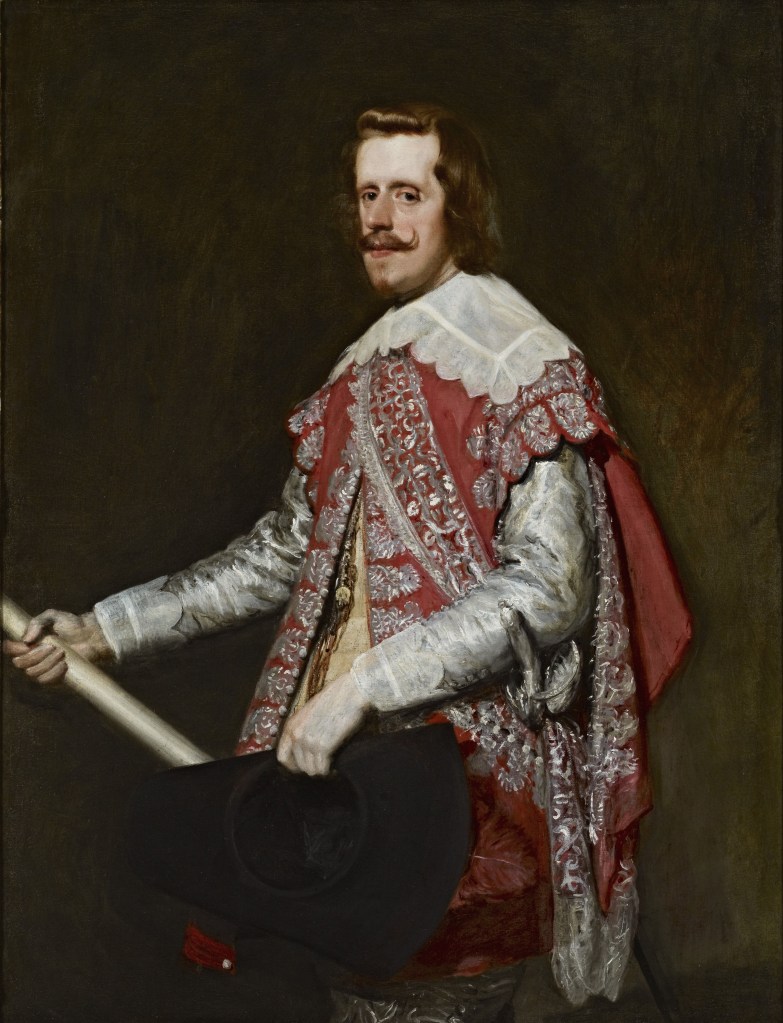
Today, June 16, marks the anniversary of the start of the sieges of the key stronghold of Lérida (Spain) in 1646, during the wars that bled 17th-century Europe.
Beyond the battles, for historians of visual culture, this period represents the peak of art as dynastic propaganda. Baroque noble lineages did not only fight with the sword. They also fought with the paintbrush. Every victory or heroic defense was turned into equestrian portraits, complex coats of arms, and allegorical prints. These were designed to immortalize family memory and service to the Crown.
As a researcher, I have always been fascinated by how the symbolic languages of court portraiture transformed military conflicts into visual monuments of power. Today, we preserve these very monuments in our archives and museums.
Did you know how important Baroque painting was as a tool of prestige for the nobility in early modern history?
(Image: Portrait of Philip IV at Fraga, painted by Diego Velázquez in 1644. The Frick Collection)
 Mario Santos de Grajal y López